
Orthodontic Technology · Dental Tech
The records problem behind inconsistent treatment plans
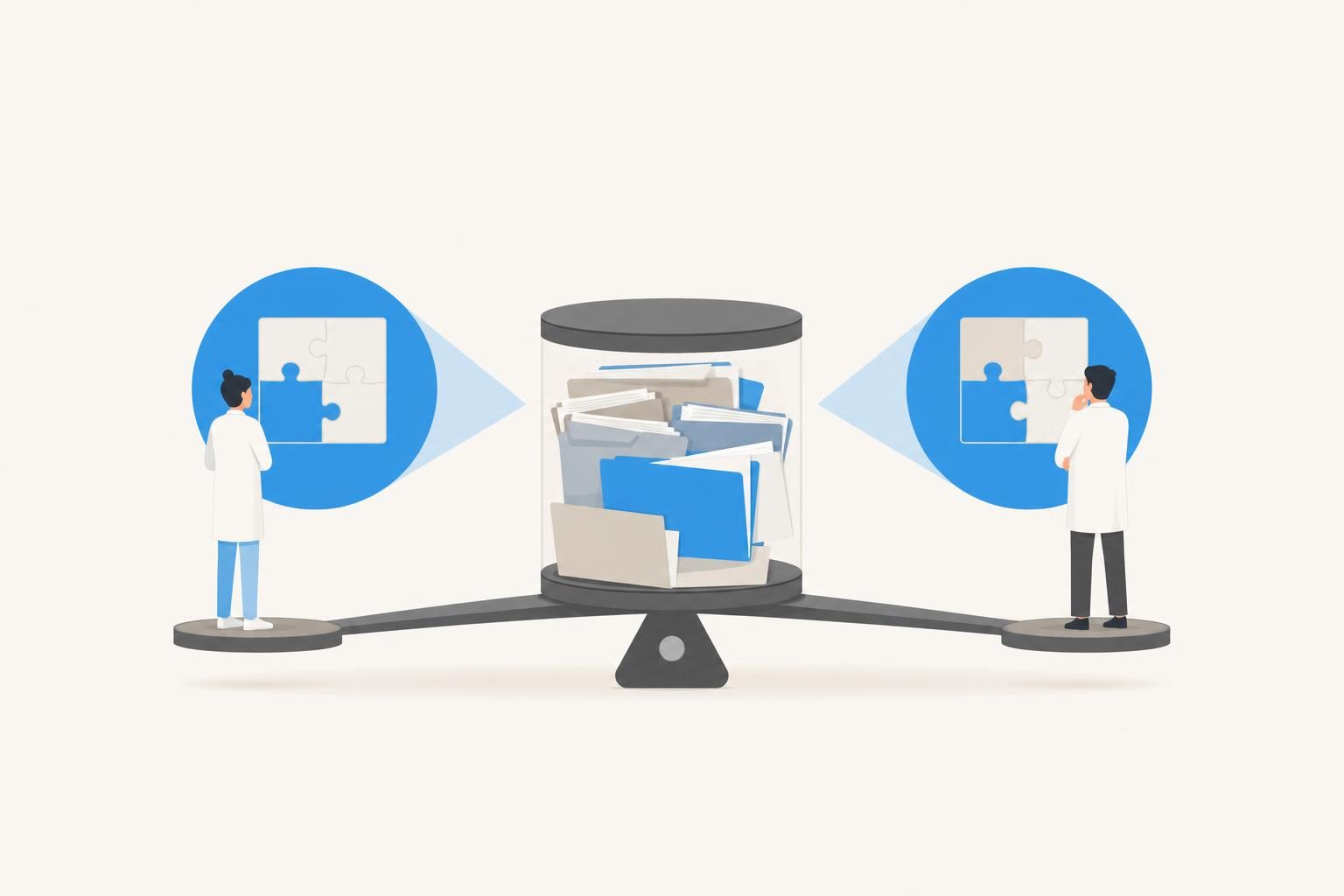
When two clinicians plan the same case differently, the disagreement is often not clinical. It's that they were looking at records captured under different conditions.
Give the same case to two experienced orthodontists and you’ll sometimes get two different plans. That’s not necessarily a problem — clinical judgement is part of the job.
But a share of that variation isn’t judgement at all. It’s that the two clinicians were reading records taken under different conditions, and neither set was wrong, exactly. They just weren’t comparable.
Where photographic records drift
Clinical photography is treated as documentation. It is also measurement, and it inherits every error that measurement does.
Head position. A few degrees of pitch, roll or yaw changes apparent midline, apparent canting, and the relationship of incisal edge to lip line. Nothing about the patient changed.
Lip posture. Repose, relaxed smile, social smile, posed smile. These are different states, and smile analysis depends on which one you captured. If the progress photo was a posed smile and the baseline was relaxed, the comparison is measuring instruction, not treatment.
Lighting and lens. Focal length changes apparent facial proportion. Lighting changes perceived gingival display and shadow at the buccal corridors.
Timing. Photographs taken straight after appliance adjustment look different from those taken a week later.
Individually small. Together they are easily enough to move a borderline extraction decision.
Comparison is where the error compounds
A single set of records taken slightly off is usually workable — a clinician reads it in context.
The problem is progress assessment, which is inherently a comparison. Baseline, mid- treatment, final. If each was captured under different conditions, the differences between them contain both the treatment effect and the capture variation, and nothing in the image tells you which is which.
This is the mechanism behind the familiar frustration of a case that looks like it has regressed between appointments when clinically it hasn’t. The patient didn’t change; the photograph did.
Standardisation is unglamorous and effective
The fix is protocol rather than equipment, and most of it is free:
- A fixed capture position. Marked floor position, fixed camera height, fixed distance.
- A consistent instruction script. The exact words used to ask for each lip posture, used identically every time by every operator.
- A fixed series. The same views in the same order, so a missing view is obvious.
- Natural head position, recorded the same way each visit.
- One lighting setup, left alone.
Write it down, laminate it, keep it where records are taken. A written protocol is what makes the record reproducible by whoever is on shift — and reproducibility is the whole point.
Where automation genuinely helps
Automated analysis is often discussed in terms of speed. The more valuable property is consistency: a landmark placed by software is placed the same way every time, without the drift that comes from a long clinic day or a different operator.
That consistency matters most exactly where human assessment is weakest — small changes across time, and measurements repeated across many cases. It does not remove the need for clinical judgement, and it inherits the quality of the records it’s given. Automated analysis of inconsistently captured photographs produces consistent measurements of an inconsistent input, which is worse than useless because it looks authoritative.
Standardise capture first. Then automation is measuring the patient rather than the protocol.
What this is worth
Two things, mainly. Treatment decisions rest on comparable evidence rather than on whichever day the photograph happened to be taken. And when you show a patient their progress, you’re showing them their teeth — not a change in camera position.
That second one is also the easiest way to explain to a team why the protocol matters.
Smilysis is dental AI and clinical imaging software for orthodontic smile analysis and treatment mapping. More at smilysis.com.