
Orthodontic Technology · Dental Tech
Why Repeatable Orthodontic Photos Improve Planning
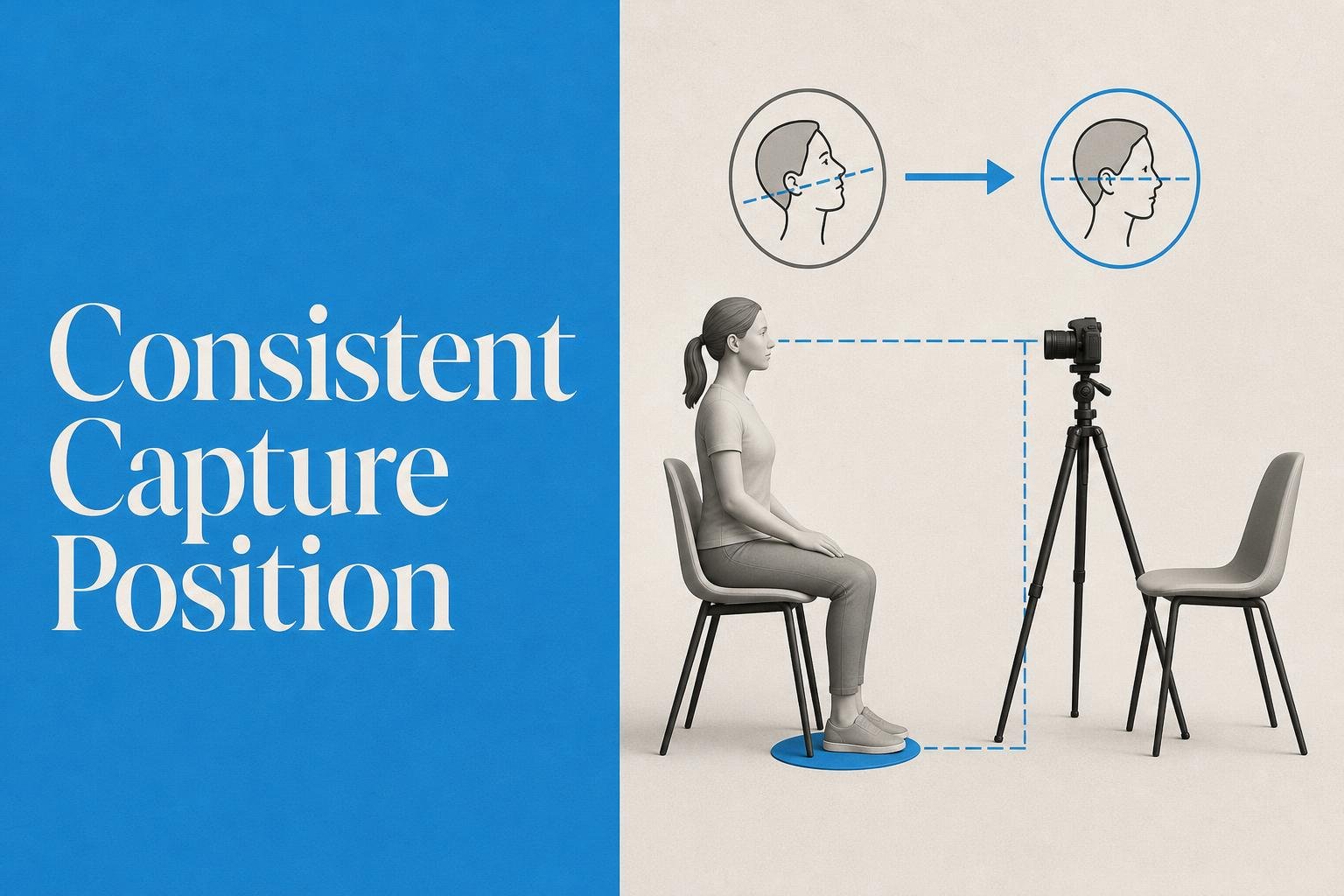
In orthodontic imaging, a clear photo is not always a usable photo. If the capture position changes from visit to visit, even a sharp image can lose its value for comparison. The issue is not...
In orthodontic imaging, a clear photo is not always a usable photo. If the capture position changes from visit to visit, even a sharp image can lose its value for comparison. The issue is not simply image quality. It is consistency.
That is why our workflow should focus on standardizing the retake trigger, not just the camera setup. When the frontal smile photo is off-axis, the team should compare it immediately to the baseline before the patient leaves. If head tilt, camera height, or lip framing makes incisal display harder to judge, that view should be retaken on the spot. This small step helps preserve the clinical meaning of the record.
Comparison should be built into the capture process
Repeatable imaging depends on a simple idea: every photo should be captured with comparison in mind. The goal is not to collect more images. The goal is to create images that allow us to evaluate the same landmarks across appointments. When the capture position shifts, the record may still look polished, but it becomes harder to use for planning, monitoring, and communication.
For orthodontists and dental professionals, this means thinking beyond whether a photo looks good in isolation. A frontal smile image should be judged against the prior record. The same is true for the other standard views. If the position changes, the comparison weakens. If the position stays consistent, the clinical story becomes much clearer.
Standardize every set, not just one view
The same check should happen for every set of records: front at rest, smile, right lateral, left lateral, and retracted intraoral views. Each image has a role, but each one only becomes truly useful when it can be compared reliably over time. Consistency across the full series supports better planning because it reduces ambiguity.
This is where a disciplined imaging routine matters. A team that reviews each view before the patient leaves can catch small issues immediately. A slight change in head position, a different camera height, or altered lip framing may seem minor in the moment, but those differences can make the next appointment harder to interpret. Standardization helps protect the integrity of the chart.
Useful records support planning, not just documentation
Clinical records should do more than fill a chart. They should help us make decisions. When comparison is part of the workflow, the images become tools for planning instead of static documentation. That shift is especially important in orthodontics, where subtle changes matter and progress is often assessed over time.
At Smilysis, we believe clinical imaging should support repeatability, clarity, and confidence. When the team is trained to compare immediately and retake when needed, the entire record set becomes more dependable. Better records lead to better conversations, better planning, and a smoother clinical workflow.
For practices looking to strengthen imaging consistency, the first step is often not a new photo—it is a better standard. Learn more about our approach at Smilysis clinical imaging solutions.
Repeatable images do not happen by accident. They happen when the team treats comparison as part of the capture process, view by view, appointment by appointment. That is how we turn orthodontic photos into records that truly work for treatment planning.
Explore more about our imaging philosophy at Smilysis.